
-
10,000+
Students reached across Côte d’Ivoire and Honduras
-
10 months
Additional learning gained by Ivorian students
-
42
Ivorian schools supplied with MadiDrop water purification tablets
-
20%
Targeted improvement in learning outcomes among Honduran students
“Now, my child can stay in the school in our community. It’s closer, it’s safer, and I feel proud knowing our school is becoming a place where children want to learn.”
The Challenge
Across cocoa- and coffee-growing regions, low incomes and seasonal volatility shape the choices available to smallholder families. Children often help with work on the family farm, which can contribute to lower school attendance and a higher incidence of child labor.
Education can play an important role in expanding future opportunities, but many rural communities face significant barriers. Schools may be distant or under-resourced, and learning outcomes remain low even where enrollment has improved. These challenges reinforce a cycle in which limited education leads to low earning potential and fewer opportunities for the next generation.


Our Approach
Enveritas is addressing education challenges by working with communities to close gaps in both learning outcomes and school conditions. Our interventions are guided by rigorous baselining and community input, enabling us to fill the right needs and set up practical pathways for implementation.
Interventions include improvements to school infrastructure and remedial lessons that address foundational skill gaps, developed with education experts and government partners. Communities lead implementation, strengthening local ownership and ensuring that improvements are sustained over time.
In Côte d’Ivoire
Côte d’Ivoire produces nearly half of the world’s cocoa, yet many farming communities face persistent poverty and limited access to quality education. While primary school enrollment is high—estimated at over 95%—attendance and learning outcomes remain uneven. Many students fall behind in foundational literacy and numeracy, and economic pressures continue to contribute to child labor in cocoa-growing areas.
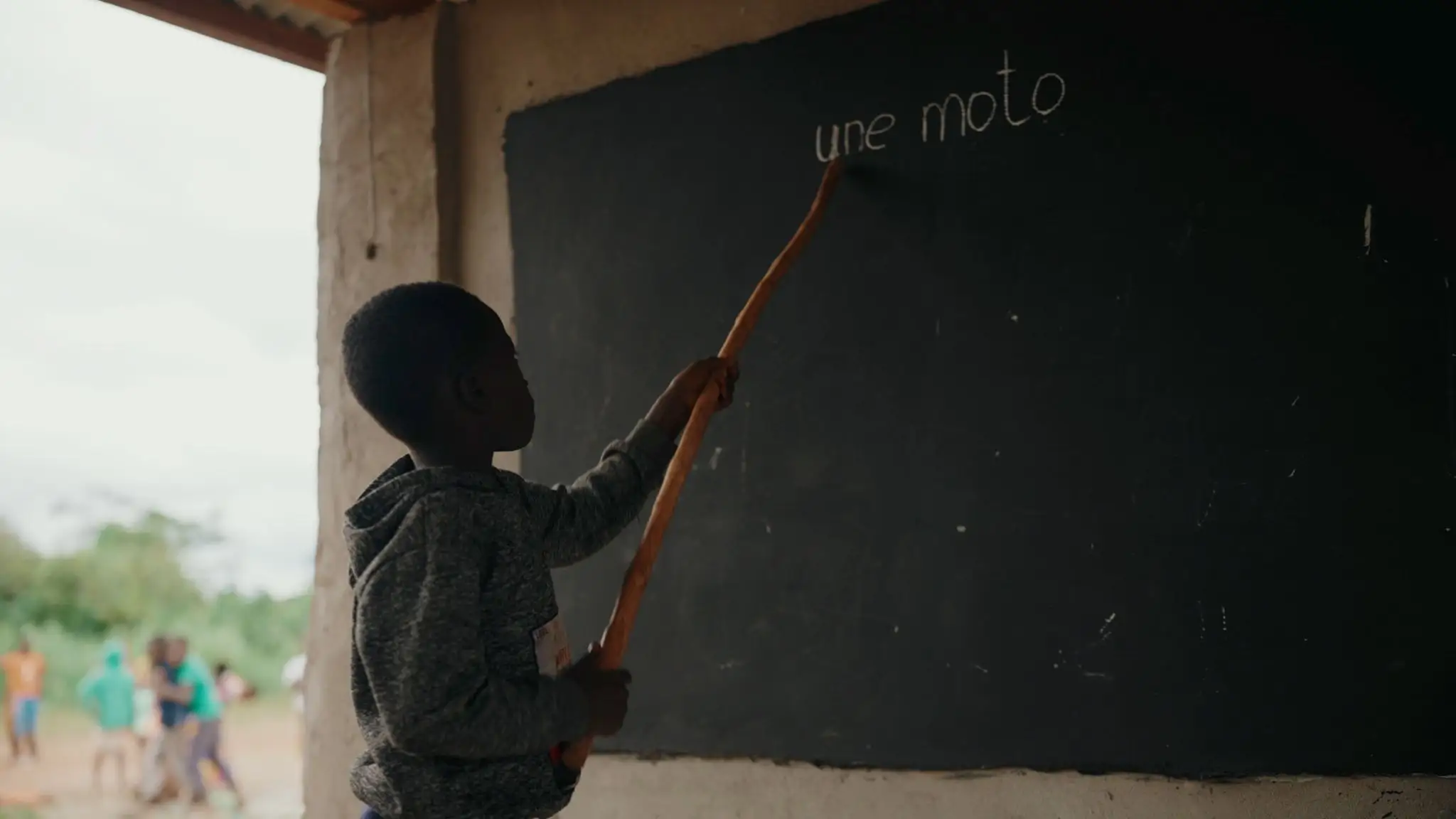
In partnership with communities and the Ministry of Education, Enveritas supports targeted interventions to improve both learning and school conditions. Remedial lessons help students catch up on core skills, while investments in school infrastructure create more supportive learning environments. Together, these efforts help improve attendance and enable students to build the foundational skills needed to progress through the education system. Thus far, the lessons have helped participating students gain the equivalent of 10 months of additional learning.


Poor school conditions extend beyond the classroom. In many cocoa-growing communities, residents rely on unprotected surface water or shared boreholes that are frequently overused and prone to breakdown. Enveritas testing across 88 school water sources in Côte d'Ivoire found that two-thirds were contaminated, contributing to the diarrheal disease that keeps children out of class. MadiDrops, ceramic tablets that purify drinking water at the point of use, offer a practical solution where infrastructure falls short. We have distributed MadiDrops to over 42 schools with contaminated water sources, providing 10,000 students with clean water.

In Honduras
In Honduras’s coffee-growing regions, similar challenges limit access to education. Over 40% of coffee farmers live below the poverty line, and more than half of farms are considered at risk of child labor. Learning outcomes remain low, with over 70% of children in Lempira unable to read a simple text by age 10. Drawing directly from our Côte d'Ivoire model, Enveritas is piloting an intervention in Honduras that combines learning environment improvements and targeted remedial instruction, with a target increase in learning outcomes of 20%.


